25 years after 9/11, terrorist threats facing the United States have evolved
In the wake of 9/11 and the global war on terror, terrorist threats have changed, especially as the rise of the Internet has allowed many “lone wolf” actors to carry out individual attacks without the institutional backing of an established terrorist group. In an article quoting CERL Executive Board Member General Joseph Votel, RFE/RL lays […]
Third-party security verification of defense contractors must be maintained
In July 2026, the Department of Defense issued two memos suspending the Cybersecurity Maturity Model Certification (CMMC) Program, the result of five years of work to secure the U.S. defense industrial base. In a piece for Lawfare, Michael McLaughlin and CERL Executive Board Member Harvey Rishikof examine the haky legal ground underpinning the memos, and […]
Experts weigh in on reports of sailors jumping overboard on USS Abraham Lincoln
Sailors aboard the USS Abraham Lincon reportedly jumped overboard amid worsening conditions on an extended 250-day deployment in the Middle East. CNN spoke with CERL Executive Board Member Brigadier General Stephen Xenakis about the strain an extended deployment can have on military service members and what can be done to support the welfare of service […]
The Senate must reject Todd Blanche as attorney general

The Senate confirmation hearing for Todd Blanche, acting attorney general and former private lawyer for President Donald Trump, will take place tomorrow, July 15, 2026. In an opinion for The Guardian, CERL’s Professor Claire Finkelstein urges the Senate to reject Mr. Blanche as attorney general, citing grave rule of law concerns. Mr. Blanche has pursued […]
Breakdown of MOU in Iran could lead to escalation
CERL Executive Board Member General Joseph Votel is quoted in several articles and has appeared in various radio and tv interviews discussing the breakdown in diplomacy and the resumption of strikes between the United States and Iran over the Strait of Hormuz. He explains the history of the conflict, how the war has affected American […]
Building a shared understanding of national purpose in the United States
Brigadier General Stephen N. Xenakis, MD, member of CERL’s Executive Board, argues in an opinion at Newsweek that the United States needs to reclaim a shared understanding of its national purpose. One way to do this is to create a universal program of national service, involving not just military service but also civilian pathways in […]
250th anniversary of America’s founding brings moment to reflect on executive power
The Declaration of Independence not only rejected monarchical rule but also called for the dismantling of the British class system in favor of popular sovereignty. Professor Finkelstein argues in a piece published in Root Quarterly that the present state of the American political system appears to have bestowed monarchial powers to the president in a […]
250 years later, it is time to reinforce a fundamental value: equality under the law
The Declaration of Independence not only rejected monarchical rule but also called for the dismantling of the British class system in favor of popular sovereignty. Professor Finkelstein argues in a piece published in Root Quarterly that the present state of the American political system appears to have bestowed monarchial powers to the president in a […]
Experts concerned about congressional inaction on Iran MOU

Following the JCPOA agreement that President Obama signed with Iran, Congress eventually passed the Iran Nuclear Agreement Review Act (INARA) in 2015. One stipulation of the law is that the president must submit any agreement on Iran’s nuclear program to Congress within five days and for 30 days after that submission, the president is prohibited […]
U.S.-Iran MOU is less a peace deal and more a “pause in the fighting” say analysts
In recent appearances on various talk shows and news programs, Vice President JD Vance has indicated that military options are still on the table if Iran does not provide significant concessions to the United States. To date, a broader settlement has not been reached. CERL Executive Board Member Joseph Votel said in a panel held […]
Former Acting Attorney General has plan for how to repair damage to DOJ
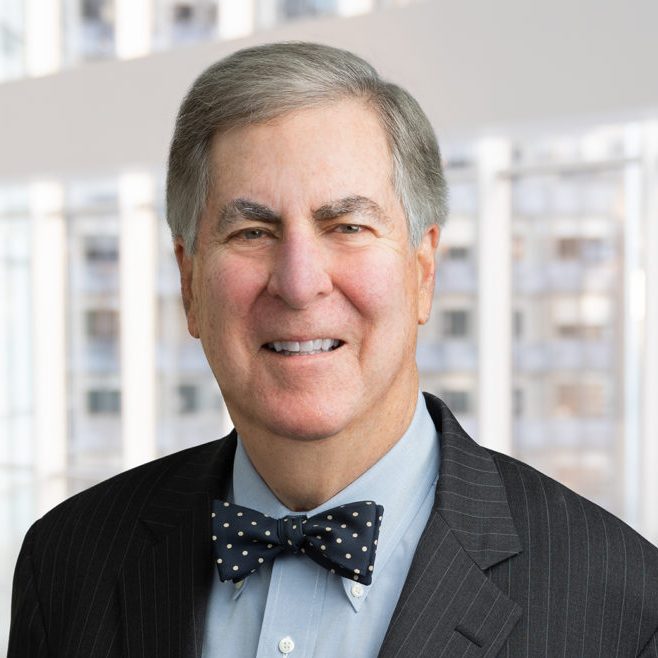
On an episode of the Checks and Balances Podcast, produced by the Society for the Rule of Law Institute, CERL Executive Board Member Stuart Gerson speaks with Gregg Nunziata about his role as the former Acting Attorney General of the United States, the eroding independence of the Department of Justice, and what can be done […]
Experts discuss ways to combat incidence of torture
At the end of June, the Organization for Security and Co-operation in Europe (OSCE) Office for Democratic Institutions and Human Rights held the third 2026 Supplementary Human Dimension Meeting to discuss how to better implement commitments to prevent torture and ill-treatment. At the event, CERL Advisory Council Member Mark Fallon gave a talk on the […]
DOD turns to military lawyers to enforce Trump administration immigration goals

Defense Secretary Pete Hegseth has authorized the use of involuntarily activating military lawyers as immigration judges to alleviate the backlog that has developed as a result of the Trump administration’s detention and deportation agenda.At Bloomberg Law, CERL Distinguished Senior Fellow Brenner M. Fissell discusses how this decision has continued a recent trend of forcing military […]
Looking back at 250 years of the Declaration of Independence
To commemorate the 250th anniversary of the adoption of the Declaration of Independence, CERL Faculty Director spoke to Penn Today about the bravery that was shown by the founders when they signed the Declaration, as well as the complicated legacy of the document. Claire Finkelstein is the Algernon Biddle Professor of Law and Professor of […]
Landmark Supreme Court decision met with criticism
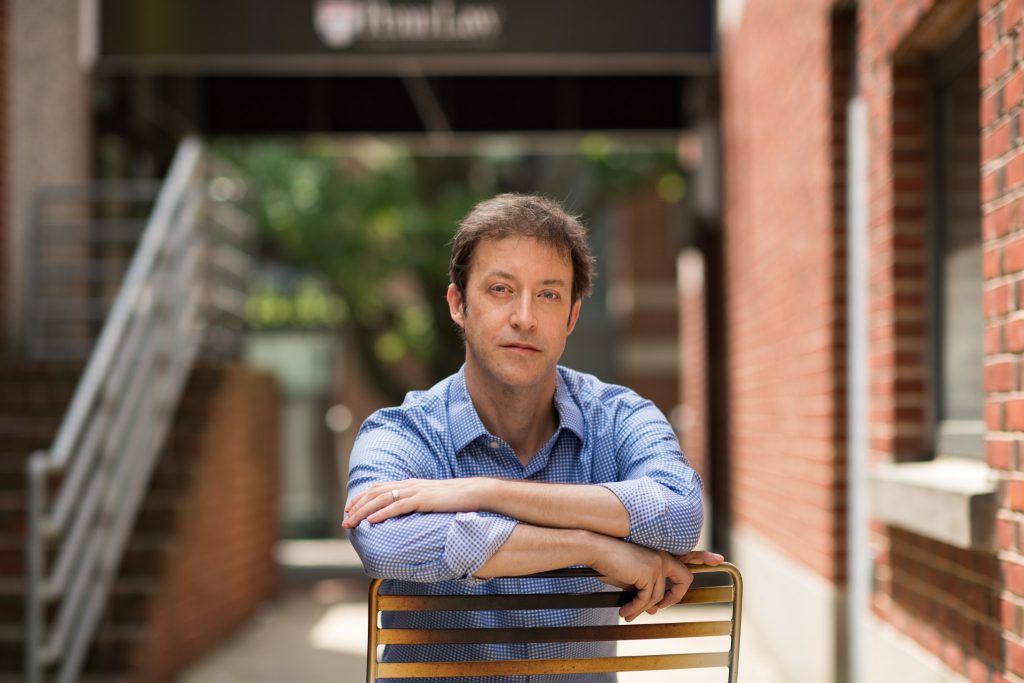
In late June 2026, the Supreme Court decided the case Blanche v. Lau, which set new standards for some returning green card holders in the United States. On MS NOW, Affiliated Faculty Member Kermit Roosevelt draws parallels between what is happening today in the United States and the period immediately following reconstruction in the post-Civil […]
With US-Iran memorandum of understanding in place, experts look to future
In an appearance on Fox News, CERL Executive Board Member General Joseph Votel discusses the preliminary U.S.-Iran peace plan and gives his thoughts on some of its provisions regarding Iran’s nuclear program. General Votel is also quoted in an article discussing the use of AI in making targeting decisions in the military. He states that […]
Battle over birthright citizenship tests conflicting interpretations of 14th amendment
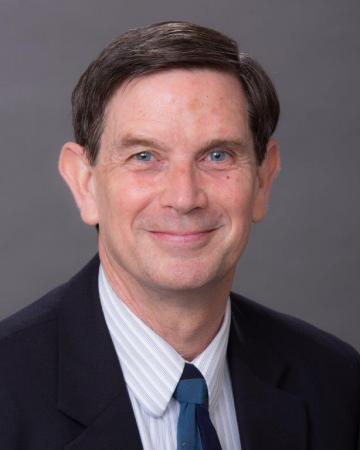
One of the issues that has received significant attention in the second Trump administration is the effort by the president to restrict birthright citizenship. CERL Affiliated Faculty Member Rogers Smith wrote a book on the subject in 1985 while he was a professor at Yale. Professor Smith spoke to CBS News about his thoughts on […]
Trump administration changing the way America deals with drug cartels

In early June, the United States killed the alleged leader of the Venezuelan gang Tren de Aragua using a precision missile strike to hit a small building in the Venezuelan countryside. The killing of Héctor “El Niño” Guerrero was reminiscent of U.S. strikes against terrorist targets in the Middle East during the war on terrorism. […]
Panel of experts discusses MOU in Iran conflict
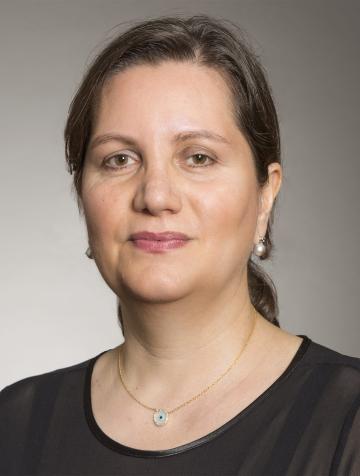
Following the signing of a Memorandum of Understanding that appears to bring Operation Epic Fury to a close, Perry World House brought together a panel of experts to discuss the deal, including CERL Affiliated Faculty Member Firoozeh Kashani-Sabet. Professor Kashani-Sabet spoke about the opportunity peace offers for both Iran and the United States to move […]
Future use of Insurrection Act in the hands of the courts
In the Supreme Court case Trump v. Illinois, the Court ruled that in order to federalize the National Guard under 10 U.S.C. § 12406(3), the president would need to demonstrate that he is unable to execute federal law with regular U.S. military forces. However, the majority also made clear that § 12406 is not excluded […]
Erosion of legal norms after 9/11

In an episode of the Lawyering Without Law podcast, created by the Knight First Amendment Institute at Columbia University, CERL Executive Board Member Alberto Mora discusses his time serving as the General Counsel of the Navy during the George W. Bush administration. During his tenure, he discovered that torture was being sanctioned by the highest levels of […]
Potential peace deal looming in Iran conflict
President Trump has threatened to launch attacks against Kharg Island, the central site of the Iranian regime’s energy exports. Quoted in an article from The War Zone, CERL Executive Board Member General Joseph Votel said that seizing the island would be a “significant undertaking,” requiring upwards of 1000 soldiers to accomplish. Speaking with NPR and […]
Gender sensitive reparations mechanisms essential to repair damage of enforced disappearances

The United Nations Committee on Enforced Disappearance recently adopted a first draft of a comment on the impact of enforced disappearances on women and girls. CERL Affiliated Faculty Member Rangita de Silva de Alwis discusses the importance of gender- sensitive reparation policies that will help women and girls affected by enforced disappears regain their agency […]
Trump admin AI memo has a ‘credibility problem’
Earlier this month, the Trump administration released a document called the National Security Presidential Memorandum 11, which instructs security agencies to accelerate AI adoption and removes previous Biden administration restrictions. In an article published by the Council on Foreign Relations, CERL Affiliated Faculty Member Michael Horowitz states that while the document pushes for some commonsense […]
Building responsibility into sanctions systems

In an article published at Just Security, Professor William Burke-White, member of CERL’s Affiliated Faculty, discusses how sanctions can give rise to corruption in cases where legal prohibitions and the authorized channels for economic activity are uncertain or fragmented. This ambiguity can arise when countries translate international law into domestic law, from differences across domestic […]
United States must confront past abuses in Guantánamo says expert
Writing for Newsweek, CERL Advisory Council Member Mark Fallon discusses how military commissions established at Guantánamo Bay continue to consider cases related to the USS Cole bombing and the September 11 attacks. He argues that much of the decision-making that led to the dysfunction at the detention facility ties back to the misuse of psychological […]
Iran conflict rises to the level of a war says expert

Both Iran and the United States have expended significant resources throughout the conflict. For the United States, this includes the deployment of 50,000 service members to the region, several aircraft carrier strike groups, and repeated use of airstrikes and drones. This operation has cost an estimated 29 billion dollars thus far, and the lives of […]
Sanctions against UN Special Rapporteur temporarily reinstated
In an update to an article published last week, CERL Advisory Council Member Orde Kittrie reported that a three-judge panel of the U.S. Court of Appeals issued an administrative stay that cleared the executive branch to enforce sanctions on Francesca Albanese, the UN Special Rapporteur for “human rights in the Palestinian Territory occupied since 1967,” […]
Families of those killed in boat strikes could seek accountability in international courts
In an opinion at Just Security, CERL Advisory Council Member Benjamin R. Farley and his coauthors discuss whether and how there will be accountability for the U.S. boat strike campaign in the Caribbean and eastern Pacific. The authors do not rule out the possibility of domestic American courts convicting those involved in carrying out the boat […]