
CENTER FOR ETHICS AND THE RULE OF LAW​

Biological agents: The future of warfare

Share this Post

Related posts

Green & Black Modern Dotted We Are Hiring Instagram Story (1200 x 840 px) (3)

Call for applications: Post-doctoral fellow

CERL logo

CERL, NIMJ, LDAD, and legal experts file amicus brief in support of Governor Newsom’s lawsuit against President Trump, citing grave rule of law concerns

White House, Washington D.C.

The Trump administration’s bias is polluting the integrity of the intelligence community and damaging the nation’s security

CERL logo

CERL files amicus brief in Trump v. Illinois on behalf of more than 150 members of Congress in the Senate and House

Group of soldiers or spies in dark room with large monitors and advanced satellite communication technology launching a missle. Includes flashing yellow light.

“Acknowledged” covert activity and regime change plans for Venezuela?

Breakthroughs in gene editing hold great promise for scientific advancement but also portend danger for the future of warfare. Establishing regulatory and ethical frameworks will be critical for countering the weaponization of biological agents, Yelena Biberman-Ocakli and CERL Affiliated Faculty Jonathan D. Moreno present in an essay for the Hastings Center.

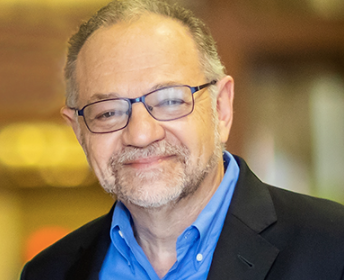
Jonathan D. Moreno is the David and Lyn Silfen University Professor of Ethics at the University of Pennsylvania and Professor of Medical Ethics and Health Policy, of History and Sociology of Science, and of Philosophy. Read his bio here.

The views expressed here are the author’s own and do not necessarily represent those of any organization or university.

Mailing List

Submissions

Submissions to The Rule of Law Post. Please refer to CERL’s submission guidelines for additional details on the blog post format. Should your submission be accepted, we ask that you please complete the Agreement to Transfer Copyright.

Please upload text in one document under 6 mb. Preferred format as a simple text file (.txt).

Share Biological agents: The future of warfare on:

LinkedIn
Twitter
Facebook
Reddit
Email
Print
Biological agents: The future of warfare