CENTER FOR ETHICS AND THE RULE OF LAW​

US blockade on Iranian ports is an attempt to ‘turn the tables’ on Iran

Share this Post

Related posts

Green & Black Modern Dotted We Are Hiring Instagram Story (1200 x 840 px) (3)

CERL is hiring a director of litigation and policy — apply today!

Green & Black Modern Dotted We Are Hiring Instagram Story (1200 x 840 px) (3)

Call for applications: Post-doctoral fellow

Justice scales with gavel and stack of books on wooden table

United States military actions against Venezuela: Will international criminal law be enforced? An explainer

After Iran repeatedly threatened and closed access to international shipping in the Strait of Hormuz, the Trump administration decided to retaliate through a blockade of Iranian ports in the Persian Gulf. At CNBC, CERL Affiliated Faculty Member Michael Horowitz states that free access to the strait is now a critical component of the American agenda for ending the war, and that this tactic of preventing Iran from getting money from shipping their oil through the Persian Gulf is an attempt to extract more concessions from Iran. 

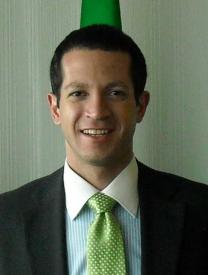
Michael C. Horowitz is Director of Perry World House and Richard Perry Professor at the University of Pennsylvania. He is also a member of CERL’s Affiliated Faculty. Read his bio here.     

The views expressed here are the author’s own and do not necessarily represent those of any organization or university. 

Mailing List

Submissions

Submissions to The Rule of Law Post. Please refer to CERL’s submission guidelines for additional details on the blog post format. Should your submission be accepted, we ask that you please complete the Agreement to Transfer Copyright.

Please upload text in one document under 6 mb. Preferred format as a simple text file (.txt).

Share US blockade on Iranian ports is an attempt to ‘turn the tables’ on Iran on:

LinkedIn
Twitter
Facebook
Reddit
Email
Print
US blockade on Iranian ports is an attempt to ‘turn the tables’ on Iran