
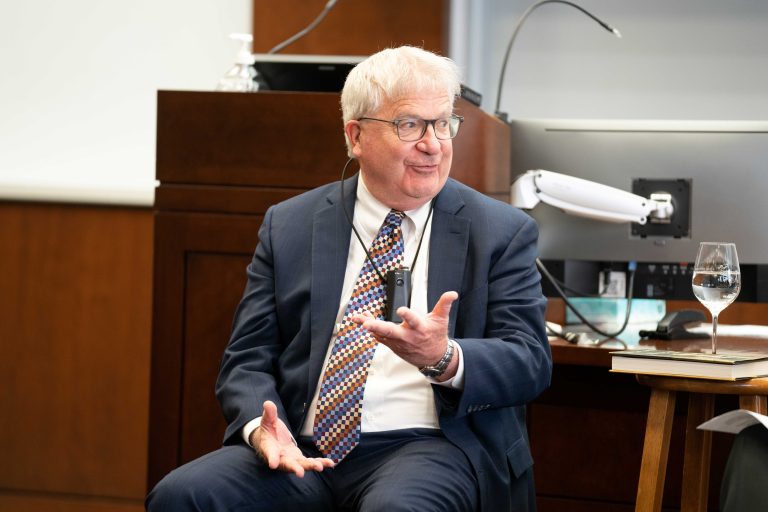


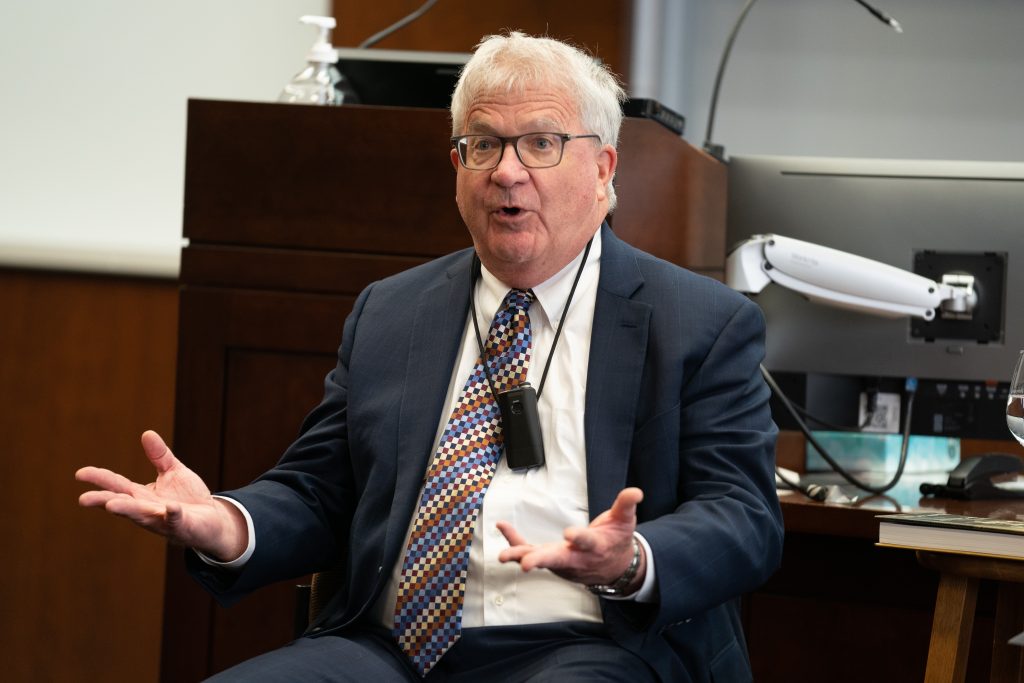
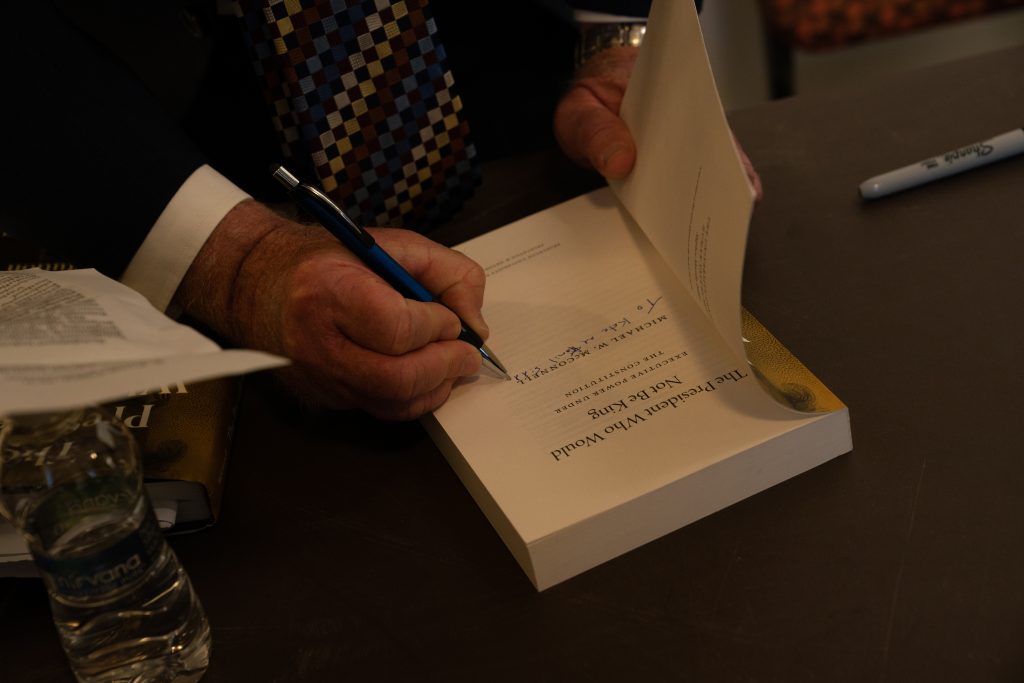
The United States has grappled with presidential powers in a number of domains, most recently with issues connected with executive privilege, war powers, impeachment, and the question of whether a sitting president can be indicted. Stanford Law Professor Michael McConnell joined CERL’s Professor Claire Finkelstein on Mar. 30 for a discussion on his book, The President Who Would Not Be King: Executive Power under the Constitution. According to Prof. McConnell:
The thing about Julius Caesar is that he was a bit of a demagogue. He had a lot of popular support, but most importantly, he had the support of the troops. So what they [the framers of the Constitution] were worried about is, if we had a popularly elected president, who was the commander-in-chief of the troops, commanded the armies, basically he’d be unstoppable.
Michael W. McConnell is the Richard and Frances Mallery Professor and Director of the Constitutional Law Center at Stanford Law School, and a Senior Fellow at the Hoover Institution. From 2002 to 2009, he served as a Circuit Judge on the United States Court of Appeals for the Tenth Circuit. He was nominated by President George W. Bush, a Republican, and confirmed by a Democratic Senate by unanimous consent. McConnell has previously held chaired professorships at the University of Chicago and the University of Utah, and visiting professorships at Harvard and NYU. He teaches courses on constitutional law, constitutional history, First Amendment, and interpretive theory. He has published widely in the fields of constitutional law and theory, especially church and state, equal protection, and separation of powers. His new book, “The President Who Would Not Be King: Executive Power Under the Constitution,” was published by Princeton University Press in 2020, based on the Tanner Lectures in Human Values, which he delivered at Princeton in 2019. His upcoming book, co-authored with Nathan Chapman, “Agreeing to Disagree: How the Establishment Protects Religious Diversity and Freedom of Conscience,” will be published by Cambridge University Press in 2022. McConnell has argued sixteen cases in the United States Supreme Court, most recently Carney v. Adams (2020). defending a provision of the Delaware Constitution requiring political balance on that state’s courts. He served as law clerk to Supreme Court Justice William J. Brennan, Jr. and D.C. Circuit Chief Judge J. Skelly Wright. He has been Assistant General Counsel of the Office of Management & Budget, Assistant to the Solicitor General of the Department of Justice, and a member of the President’s Intelligence Oversight Board. He is Senior of Counsel to the law firm Wilson, Sonsini, Goodrich & Rosati, and is co-chair of the Facebook Oversight Review Board.
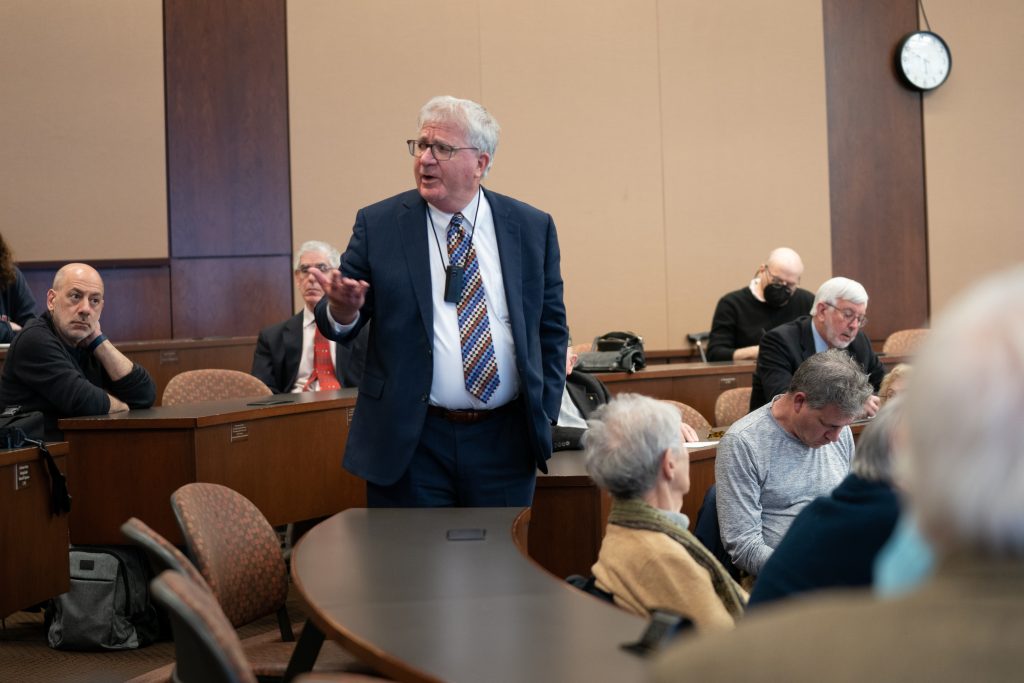
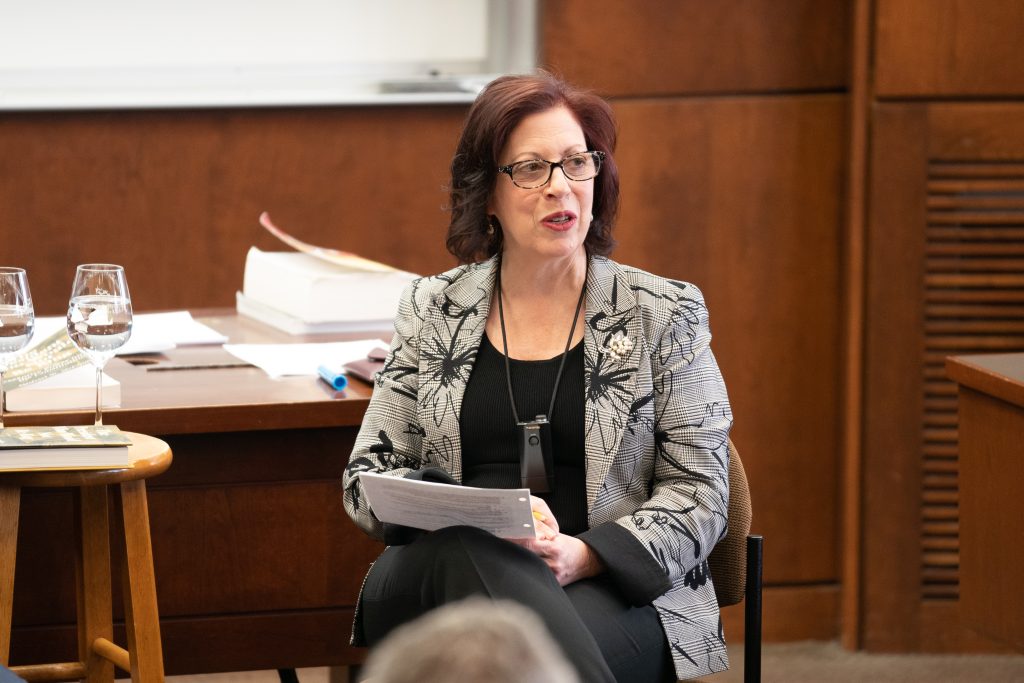
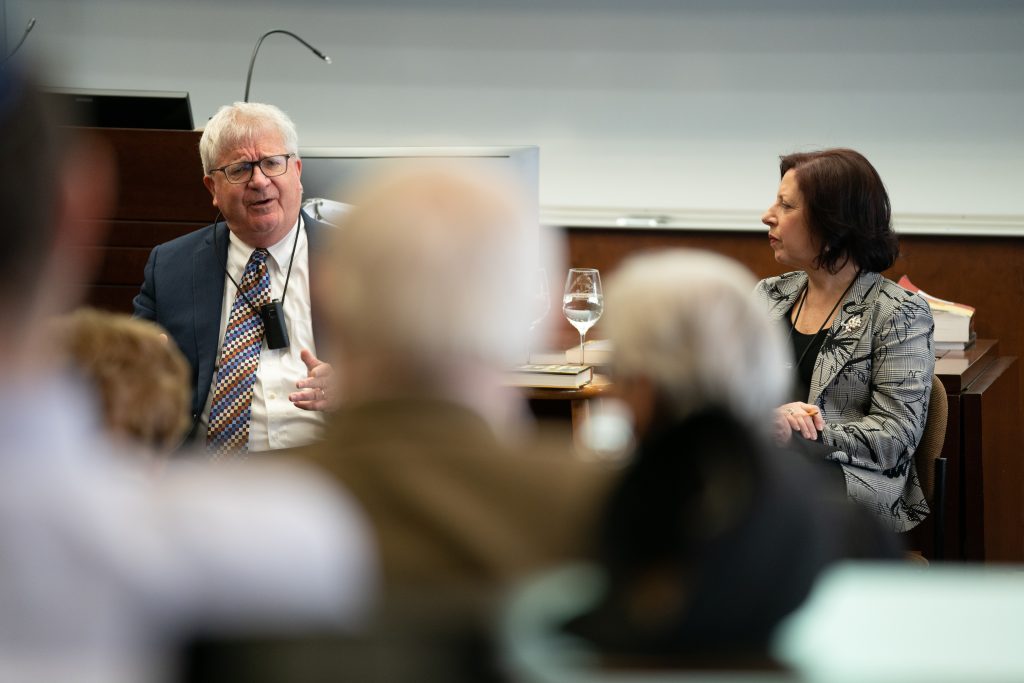
Photos by Kyle Cassidy / Annenberg